
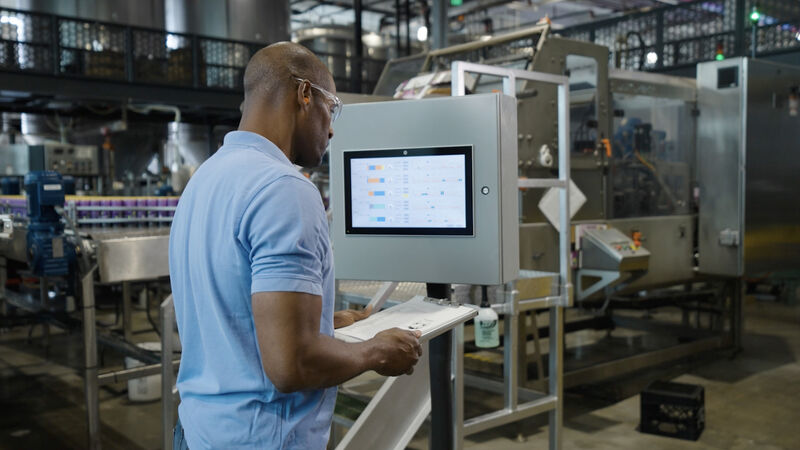
Touch technology has redefined the way humans interact with machines. From smart factories to medical devices, touch-enabled displays have replaced traditional buttons and dials, offering speed, flexibility, and intuitive operation. Yet, in industrial settings, integrating touch with LCDs is far from simple.
Industrial LCD touch integration must balance durability, precision, and environmental resistance—all without compromising optical performance or responsiveness. Let’s uncover the science behind designing reliable, user-friendly industrial touch displays.
Integrating touch technology requires the right combination of hardware, software, and mechanical engineering. Each touch type—resistive, capacitive, or infrared—comes with distinct advantages and trade-offs.
Claim: True industrial touch integration is an art of engineering that connects human intention with machine intelligence.
Table of Contents
- What Types of Touch Technologies Suit Industrial LCDs?
- How Is Touch Integrated Without Losing Optical Clarity?
- Why Does Environment Affect Touch Design?
- How to Ensure Touch Interface Reliability Over Time?
What Types of Touch Technologies Suit Industrial LCDs?
Industrial LCDs typically support three main touch technologies:
- Resistive Touch: Works through pressure, compatible with gloves, ideal for harsh environments.
- Projected Capacitive (PCAP): Supports multi-touch, sleek design, excellent optical clarity.
- Infrared (IR): Durable and unaffected by surface damage, suitable for large industrial displays.
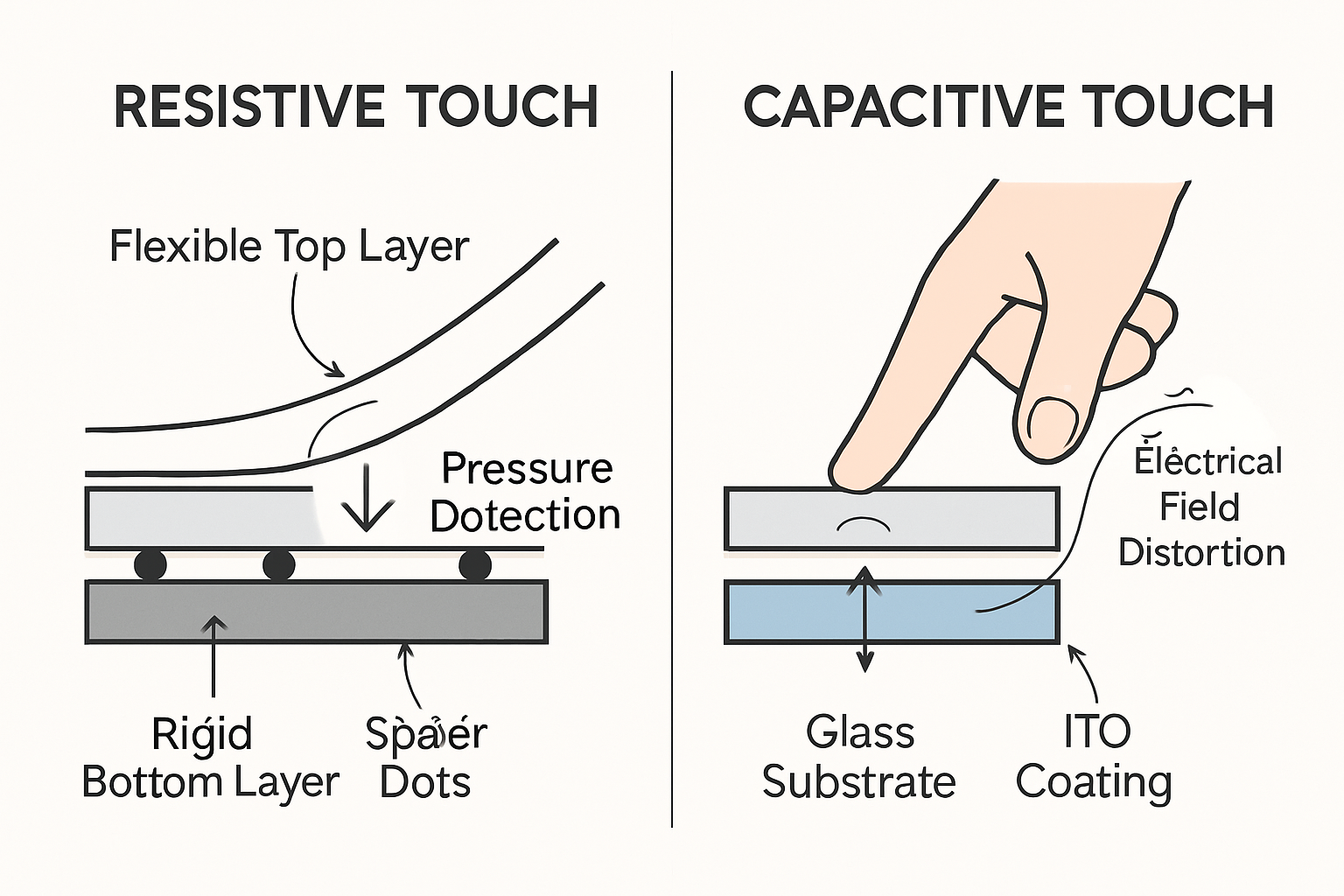
Each technology must be carefully matched to the working environment, usage frequency, and desired user experience.
Claim: No single touch technology fits all—engineering balance defines success.
How Is Touch Integrated Without Losing Optical Clarity?
Integrating touch sensors can introduce unwanted reflections or reduce contrast if not executed properly. This is where optical bonding and anti-reflective coatings become essential.
The touch sensor, LCD, and cover glass are fused using clear adhesives that eliminate air gaps, maintaining brightness and readability even under sunlight.

The final display must pass transmittance and uniformity tests to ensure precise color and touch accuracy.
Claim: Touch integration is successful only when it feels natural to the user and invisible to the system.
Why Does Environment Affect Touch Design?
A factory touchscreen faces oil, dust, vibration, and sometimes even chemical exposure. Outdoor systems must endure UV, rain, and temperature fluctuations.
Industrial LCDs use IP65/IP67-rated sealing, reinforced glass, and water-resistant coatings to maintain responsiveness in such conditions. Capacitive sensors are tuned through firmware calibration to detect touches accurately, even when the operator wears gloves.
Environmental resistance determines usability—without it, even the best screen becomes unreliable.
⚙️ Building next-generation HMI systems? Discover XIANHENG’s Industrial Touch LCD Portfolio and consult with our engineering team.
Claim: Designing for the environment is designing for reliability.
How to Ensure Touch Interface Reliability Over Time?
Touch integration doesn’t end with assembly—it extends into firmware, calibration, and lifecycle support. Industrial displays undergo:
- Static and dynamic touch accuracy tests
- Response latency analysis
- Electromagnetic compatibility (EMC) evaluations
- Durability testing up to 50 million touches

These measures ensure the screen maintains precision and responsiveness throughout its lifecycle, even under constant industrial stress.
Claim: Reliability is not measured in hours—it’s proven through millions of flawless interactions.
Conclusion
Designing an industrial LCD with touch integration blends optics, mechanics, and human factors into one seamless experience. Whether for machine control or field operations, a well-engineered touch LCD empowers productivity and efficiency.
📩 Reach out to XIANHENG for customized industrial touch solutions built for your application.


