
M238HCA-L9B sourcing starts with a practical question: can the production controller drive the offered panel at native Full HD and the refresh rate the equipment needs? A host that reports 100 Hz may be describing the controller input. An OEM order should specify what reaches the LCD and, when motion matters, which frames the operator actually sees.
Claim: A 100 Hz OEM configuration requires evidence at the panel input as well as on the equipment display.
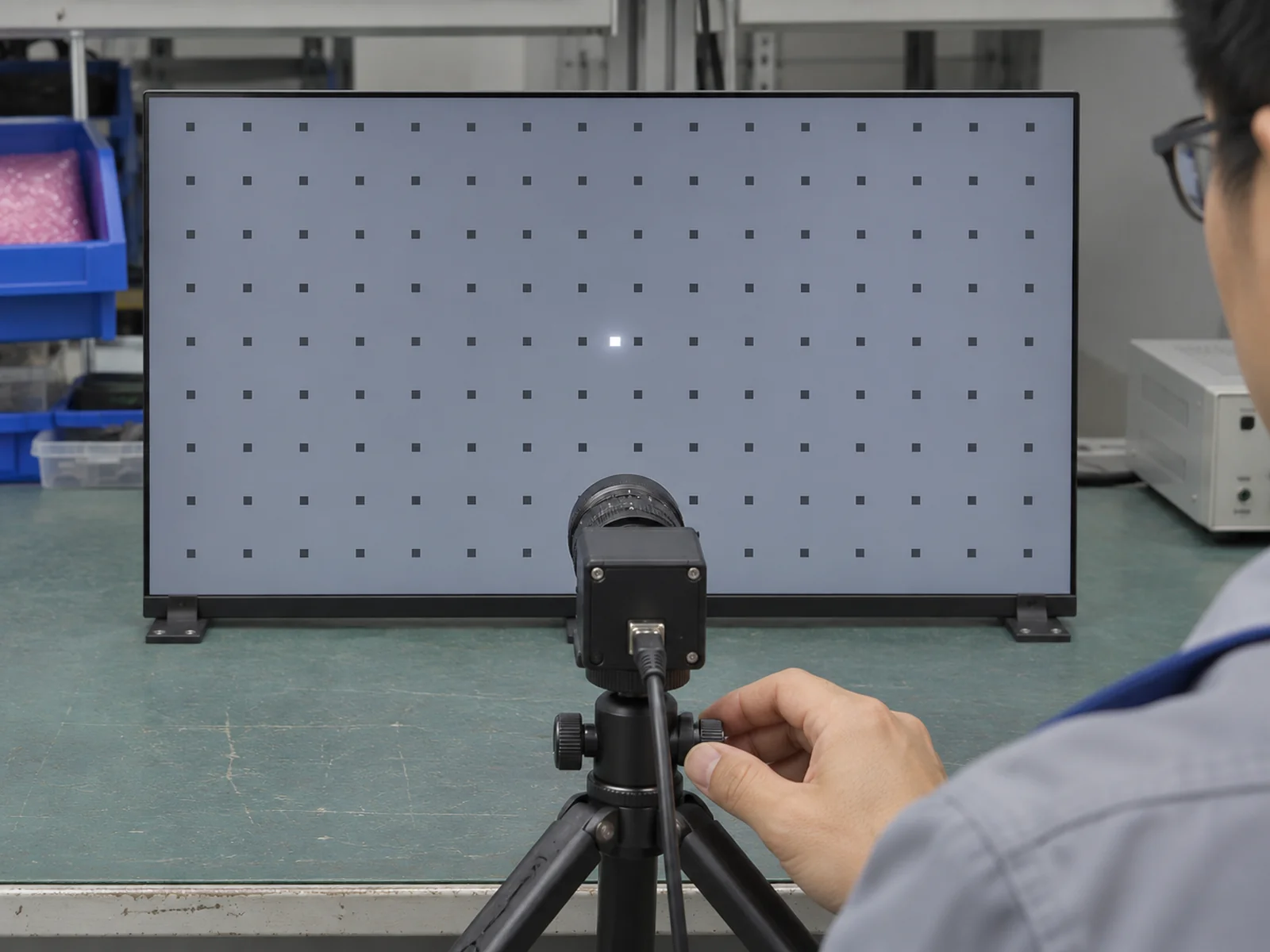
Can the Proposed Electronics Drive the Required Mode?
What Does the 100 Hz Listing Establish?
XIANHENG lists the 23.8-inch M238HCA-L9B at 1920 × 1080 and 100 Hz. The supplier PDF available for review is a summary. The applicable Innolux timing table and offered hardware revision remain unverified. Request the full label and matching manufacturer specification before defining approved modes.
The product page lists dual-channel 8-bit LVDS through a 30-pin connector, a typical 5 V LCD supply, and WLED backlighting with a separate driver. Treat these as references. Confirm the actual connector pin assignments, supply range, power sequence, and backlight current and voltage conditions before connecting the sample.
Evaluate each requested 60, 75, or 100 Hz mode separately against the offered revision. Neither a common connector nor a listed refresh rate defines the supported timing range.
Claim: The panel revision and its applicable timing table determine which modes can enter qualification.
What Must the Controller Actually Output?
Request the board revision and firmware profile, supported host input modes, and the exact programmed LVDS output. Record active pixels, horizontal and vertical totals, blanking, clock limits, and channel mapping. A board can accept a high-rate input and still send a lower fixed rate to the panel.
Illustrative calculation: Assuming horizontal and vertical totals of 2200 and 1125, a 100 Hz stream requires a full-stream pixel clock of 247.5 MHz. These totals are hypothetical. The clock measured on an LVDS pair depends on the controller's pixel packing and must be interpreted using its documentation.
If the board cannot generate the approved timing within its electrical limits, evaluate another board or a separately qualified lower-rate mode. Get the equipment owner's approval before changing a required refresh target.
Claim: A controller quotation should name the output mode and firmware that will ship.
How Should the OEM Qualify and Release the Assembly?
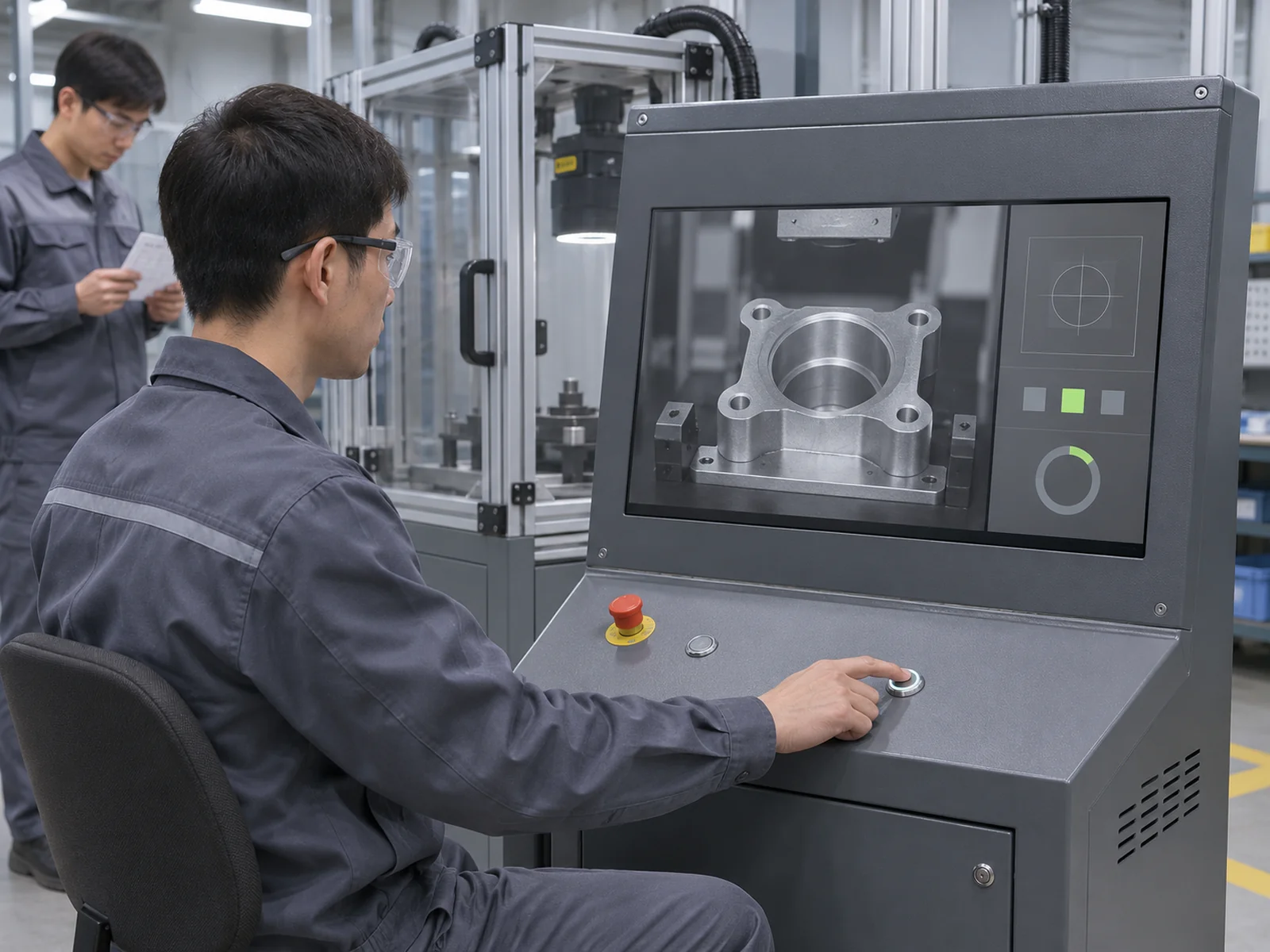
How Can the Sample Prove the Requested Mode?
Use the intended host, controller, cable, and backlight driver. Log the host's active mode, then measure or decode the panel-side timing at a suitable test point. Compare actual frame cadence, active image, and timing totals with the approved profile. Use fine lines and edge markers to check native pixel mapping and cropping.
If the equipment needs a new image on every refresh, drive a pattern with a unique identifier in each source frame. Capture the visible sequence with suitable high-speed instrumentation to check for skipped or repeated identifiers. A host settings screen or a steady test image cannot establish this behavior.
Repeat the agreed checks after startup, a host restart, and video-signal recovery. Verify the display returns to the required mode and record any fallback instead of treating a recovered image as a pass.
Claim: The sample must show both the required panel-side timing and the frame delivery the application needs.
What Should Purchasing Lock into the Order?
Specify the tested panel revision, controller board and firmware, cable drawing, driver settings, and allowed input-to-output mode combinations. Record the test method, required recovery behavior, and disposition of unsupported modes.
If the application accepts a lower rate, release only the approved profile and update the equipment specification. If 100 Hz is mandatory, hold volume release until the applicable panel documentation and the complete assembly support it. Require review of substitutions that affect the approved timing.
Claim: Volume orders should preserve the tested configuration and list only the modes approved for the equipment.
What Advantages Does XIANHENG Offer for M238HCA-L9B Timing Qualification?
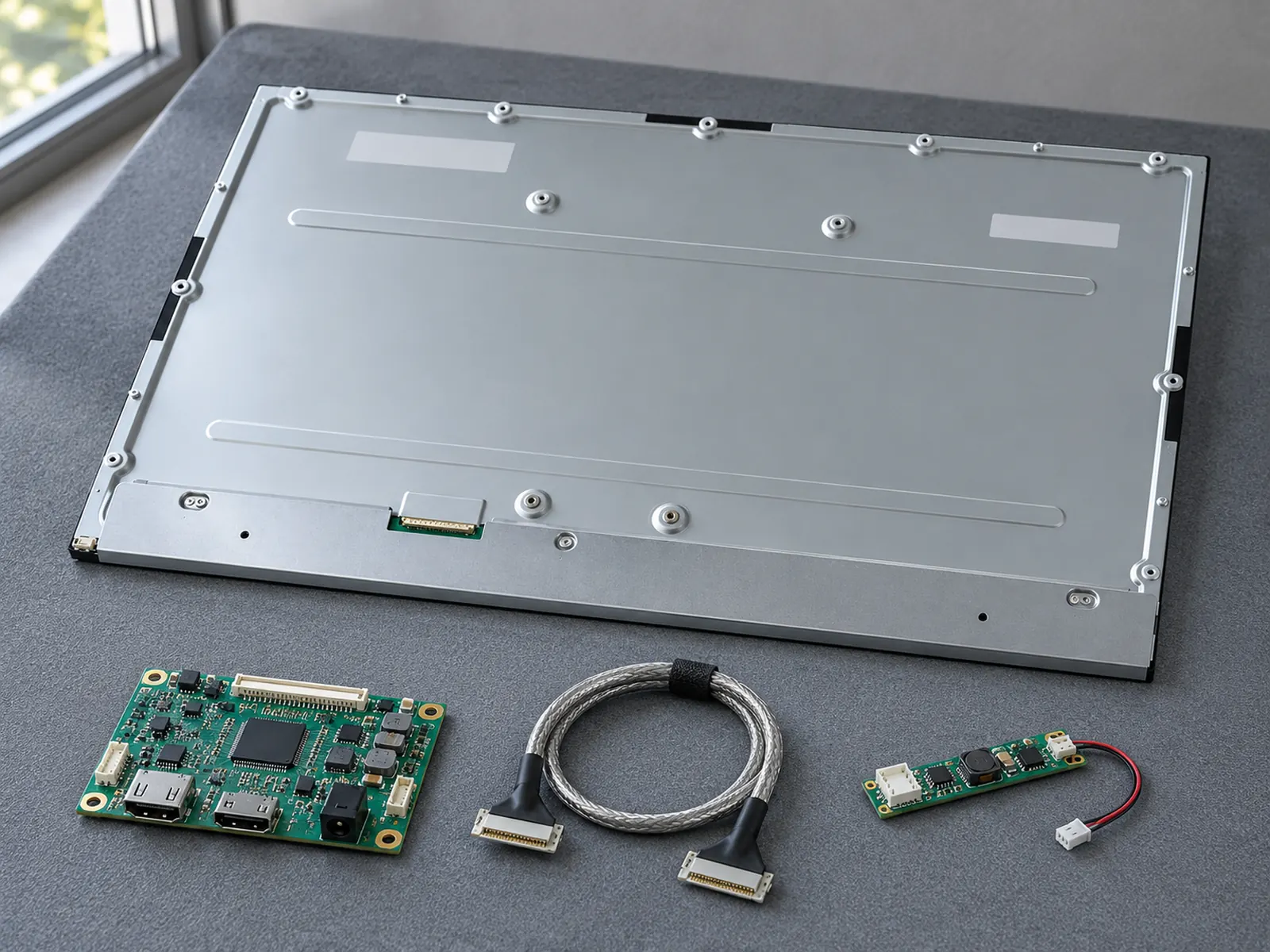
XIANHENG can review the Innolux M238HCA-L9B 23.8 Inch FHD 100Hz AAS LCD Panel alongside the host settings and controller output requirements, then help define the firmware profile, harness, driver, and sample checks.
The standard bare LCD excludes touch, and the product page lists 250 cd/m² typical luminance. Custom PCAP, printed cover glass, and bonding are separate assembly options. Selected models may be assessed for 500–1000 cd/m² or higher project targets. Feasibility for this model depends on the backlight, power, cooling, and optical stack. Approve brightness at the specified measurement surface. The monitor-oriented panel still requires qualification for the equipment environment.
Send the host and controller details, required refresh modes, installation conditions, brightness target, touch and cover requirements, and quantities. Browse the Industrial LCD Product Collection or reach out to XIANHENG to discuss a sample configuration.
Claim: XIANHENG can help specify a sample assembly with timing and acceptance criteria that purchasing can reference.


