Learn about industrial displays, their features, applications, and how to choose the right one for your needs. Explore the latest trends in industrial display technology.

Industrial displays are essential in environments where durability, clarity, and functionality are crucial. These screens operate in challenging conditions such as factories, medical settings, and outdoor kiosks, making them different from consumer-grade displays. Selecting the right industrial display requires careful evaluation of several factors, including screen size, resolution, touch technology, and resistance to environmental stressors.
With a growing market for industrial displays, businesses must ensure they choose screens that meet operational demands. Factors such as temperature resistance, brightness levels, and connectivity options play a key role in determining display performance in industrial settings. Understanding the features, applications, and selection criteria of industrial displays can help businesses make the right investment.
This guide breaks down the most important aspects of industrial displays, exploring their features, common applications, and essential selection criteria.
Table of Contents
- What Are the Key Features of an Industrial Display?
- Where Are Industrial Displays Commonly Used?
- How Do You Choose the Right Industrial Display?
- What Are the Future Trends in Industrial Displays?
What Are the Key Features of an Industrial Display?
Industrial displays differ from standard consumer screens due to their advanced durability, higher brightness, and ability to function in extreme conditions. These displays are built to withstand elements such as dust, water, and temperature fluctuations, making them reliable in industrial environments.
Understanding the core features of industrial displays can help businesses determine the right type of screen for their specific needs. Critical features include screen technology, durability, and adaptability to industrial applications.

- High Durability: Industrial displays are designed with reinforced materials to handle vibrations, shocks, and exposure to harsh substances.
- Brightness & Contrast: These displays often feature higher brightness levels (measured in nits) for visibility in bright or outdoor environments.
- Touchscreen Technology: Many industrial screens use resistive or capacitive touch technology to support gloved or ungloved operation.
- Environmental Protection: They come with IP (Ingress Protection) ratings, indicating resistance to dust and water.
- Industrial displays typically have a longer lifespan than consumer displays, often exceeding 50,000 hours of operation.
- Many models offer wide temperature ranges, allowing operation in freezing or high-heat environments.
- Screens with anti-glare coatings improve visibility under direct light.
Where Are Industrial Displays Commonly Used?
Industrial displays are found in a wide range of industries, each requiring specialized screens to suit their operational needs. These displays are essential in sectors where reliable and durable visual interfaces are necessary for efficiency and safety.
From medical applications to transportation systems, industrial displays are present in numerous industries. Their ability to withstand extreme conditions and provide accurate visual output makes them a key component in many business operations.
- Manufacturing & Automation: Used in factory control panels, robotic interfaces, and production monitoring systems.
- Medical & Healthcare: Essential for patient monitoring, imaging systems, and diagnostic equipment.
- Retail & Self-Service Kiosks: Found in ATMs, vending machines, and information kiosks.
- Transportation & Automotive: Used in GPS navigation, railway systems, and public information displays.
- Outdoor & Public Spaces: Digital signage, ticketing machines, and advertising displays rely on industrial-grade screens.
- Medical-grade displays must meet strict hygiene standards and often have antimicrobial coatings.
- Self-service kiosks use ruggedized touchscreens to withstand heavy public usage.
- Transportation displays must function reliably despite constant vibrations and extreme weather conditions.
How Do You Choose the Right Industrial Display?
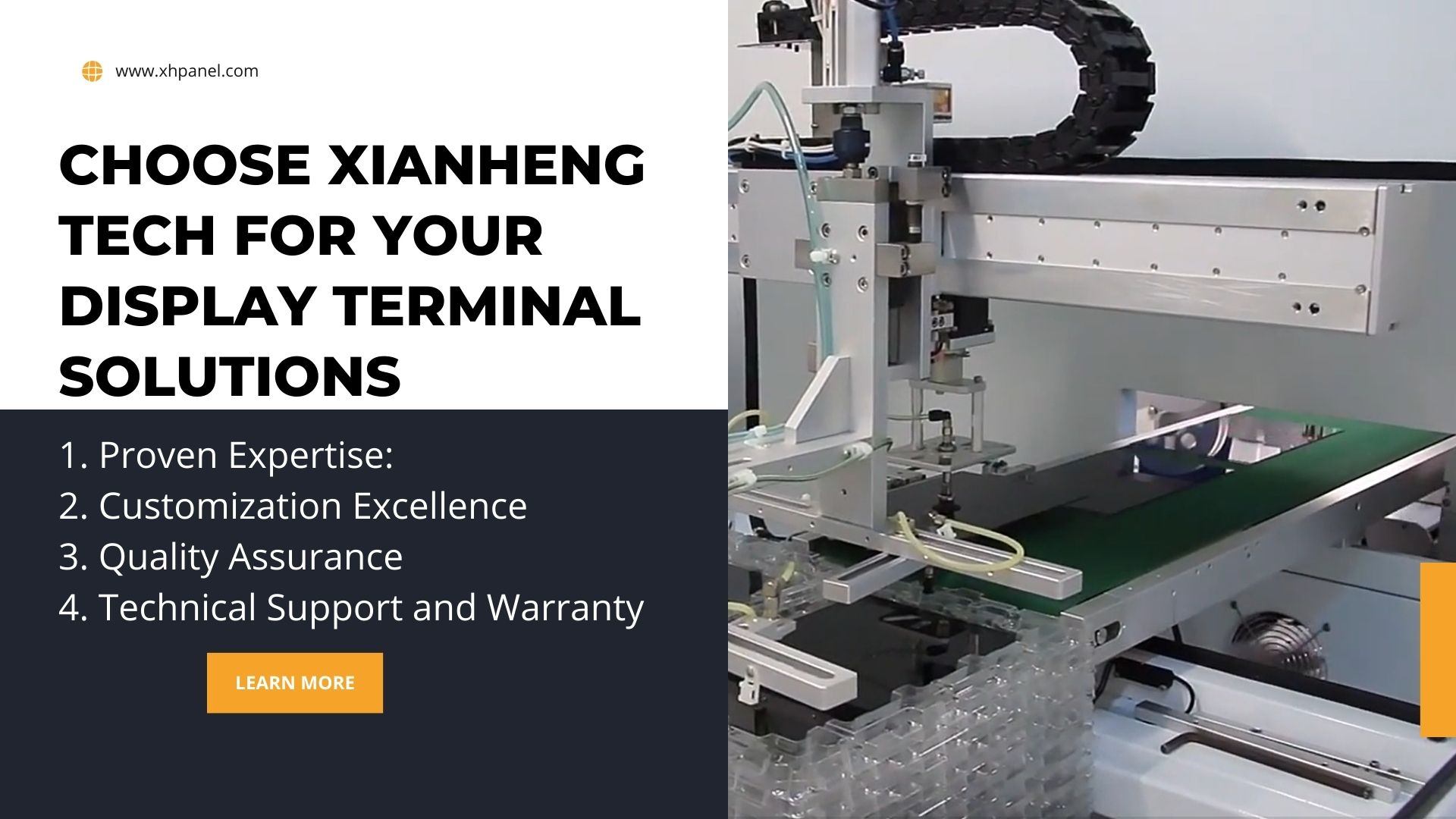
Selecting the best industrial display requires understanding the operational requirements of your specific industry. Factors such as screen resolution, interface compatibility, and mounting options play a significant role in making the right choice.
To ensure long-term performance and cost efficiency, businesses must evaluate multiple aspects of an industrial display before purchase. Key considerations include screen size, brightness, power consumption, and environmental resistance.
- Screen Size & Resolution: Displays range from compact 7-inch screens to large 43-inch monitors, with resolutions from 1280x800 to 1920x1080.
- Connectivity & Compatibility: Ensure the display supports required connections like HDMI, VGA, DisplayPort, or serial interfaces.
- Mounting Options: VESA, panel, and rack mounts provide different installation methods based on the workspace setup.
- Environmental Ratings: Displays with high IP ratings (e.g., IP65 or IP67) offer better protection against dust and water.
- High-resolution displays improve data readability in industrial environments.
- Proper mounting solutions can reduce workplace hazards and improve efficiency.
- Selecting the right touchscreen technology ensures smooth user interaction in different work settings.
What Are the Future Trends in Industrial Displays?
The industrial display market is evolving with advancements in screen technology and smart integration. Emerging trends are shaping the way businesses use these displays to improve efficiency and operational control.
New developments in display technology are enhancing durability, energy efficiency, and interactivity in industrial settings. From AI-powered monitoring to flexible displays, these innovations are paving the way for more intelligent industrial solutions.
- AI & Smart Displays: AI-driven monitoring systems can adjust brightness and contrast for optimal visibility.
- OLED & Flexible Screens: Emerging materials are making displays thinner and more adaptable to different surfaces.
- Energy-Efficient Solutions: Low-power and e-paper displays reduce energy consumption in industrial environments.
- Integration with IoT: Industrial screens are now being integrated with IoT systems for real-time data tracking and automation.
- AI-based adjustments help optimize display performance based on real-time conditions.
- Flexible OLED screens provide new installation possibilities in curved or compact spaces.
- Energy-efficient industrial displays help reduce operational costs.
Final Thoughts
Industrial displays play an essential role in various industries, providing durability, clarity, and reliable performance under extreme conditions. Choosing the right display requires considering factors like brightness, connectivity, and environmental resistance. As technology continues to evolve, advancements in AI, flexible screens, and IoT integration will further enhance industrial display capabilities. Whether used in manufacturing, healthcare, or transportation, industrial displays will continue to shape the future of digital interfaces.


