
From the Arctic’s freezing -30°C to the scorching +85°C desert heat, industrial LCDs must continue to perform flawlessly. Unlike consumer displays, industrial screens face extreme environmental challenges where failure is not an option.
Wide temperature range design ensures continuous visibility, responsiveness, and durability under thermal stress. Let’s explore how display engineers achieve this delicate balance between performance and protection.
The science behind wide-temperature LCDs lies in chemistry, physics, and thermal control—all working together to maintain stability when the environment does not.
Claim: A truly industrial LCD doesn’t fear temperature—it’s engineered for it.
Table of Contents
- What Happens to LCDs in Extreme Temperatures?
- How Are Wide-Temperature LCDs Engineered?
- What Technologies Enable Temperature Stability?
- Where Are Wide-Temperature LCDs Used?
What Happens to LCDs in Extreme Temperatures?
Standard LCDs typically operate between 0°C and 50°C. Outside this range, liquid crystal viscosity changes—slowing response time in cold conditions and causing color distortion or blackouts in heat.
At low temperatures, the LC molecules move sluggishly, leading to ghosting effects. At high temperatures, excessive fluidity causes phase instability and potential leakage from the panel.

Claim: Temperature extremes don’t destroy LCDs—they expose their limits.
How Are Wide-Temperature LCDs Engineered?
Wide-temperature LCDs are designed from the inside out. Their liquid crystal mixtures, polarizers, backlights, and driver ICs are optimized for resilience.
- LC Formulation: Special crystal mixtures maintain consistent alignment and optical response across broad ranges.
- Driver ICs: Temperature-compensated circuits stabilize voltage for pixel uniformity.
- Polarizers: Heat-resistant films maintain polarization efficiency in high-temperature environments.

This integrated design approach ensures the display maintains visual clarity and input responsiveness from extreme cold to heat.
Claim: Wide-temperature design is born from chemistry, stabilized by electronics, and perfected through testing.
What Technologies Enable Temperature Stability?
Modern industrial LCDs use a combination of active and passive temperature control technologies:
- LED Backlight Adjustment: Dimming algorithms reduce heat generation.
- Heaters and Sensors: Built-in thermal control maintains operation in sub-zero environments.
- Optical Bonding: Reduces condensation and prevents fogging under temperature swings.
- Low-Temperature IC Packages: Ensure stable signal processing at -30°C and below.

Together, these innovations allow industrial LCDs to perform in heavy machinery, transportation, and field equipment year-round.
🌡️ Need displays that survive both polar winters and desert heat? Explore XIANHENG’s Wide-Temperature Industrial LCDs designed for reliability in any climate.
Claim: Thermal control isn’t about resisting heat or cold—it’s about mastering both.
Where Are Wide-Temperature LCDs Used?
Applications demanding extreme reliability rely on wide-temperature displays:
- Outdoor kiosks and vending systems
- Automotive and marine displays
- Oil exploration and mining equipment
- Defense and aerospace systems
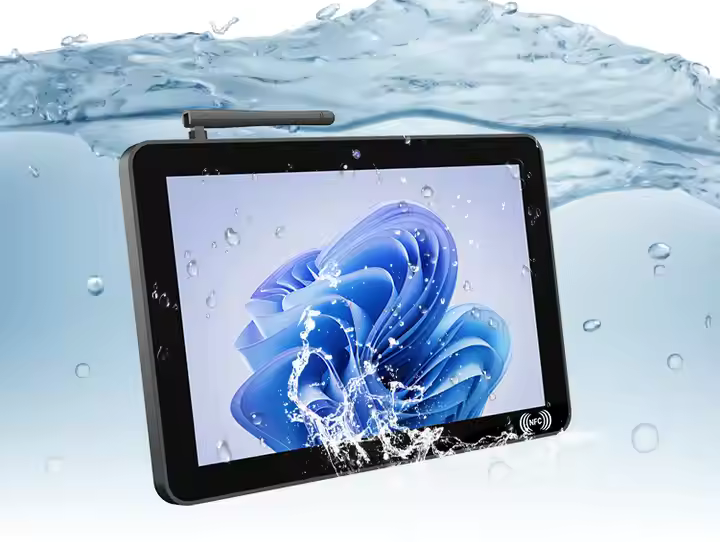
Each deployment demands not just a display—but an engineered visual system that remains stable when the environment changes unpredictably.
Claim: Wide-temperature LCDs define reliability where failure means downtime or danger.
Conclusion
The ability to perform across a wide temperature range distinguishes industrial LCDs from consumer-grade screens. Behind every reliable display lies a combination of material science, precise engineering, and environmental foresight.
📩 Contact XIANHENG today to customize rugged, temperature-tolerant display systems for your applications worldwide.


