

Hospitals and clinics operate in mission-critical environments where information must be delivered clearly and reliably. From surgical rooms to waiting areas, displays play a vital role in communication and decision-making.
High brightness LCDs ensure precision during surgeries, accurate diagnostics, and clear patient communication—even under bright lighting conditions.
Let’s explore the essential reasons why healthcare facilities are increasingly adopting high brightness LCD technology.
Claim: In medicine, clarity and reliability are not optional—they are life-saving.
How Do High Brightness LCDs Support Surgical Accuracy?
Surgical procedures often rely on real-time imaging systems. If screens are dim or unclear, the accuracy of the procedure is compromised.
High brightness LCDs deliver luminance levels that ensure every detail of an MRI, CT scan, or laparoscopic image is visible to the surgical team.
Advanced color calibration ensures accurate rendering of tissues, critical for decision-making during operations.
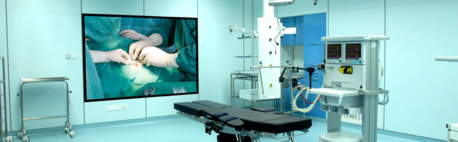
Claim: High brightness ensures surgical precision and reduces risk in critical procedures.
Can They Improve Patient Communication and Experience?
In waiting areas and consultation rooms, LCDs are used to communicate medical information, queue numbers, or health tips.
High brightness ensures these displays remain readable, whether in daylight-filled lobbies or crowded waiting rooms.
Hospitals in Europe use these displays to reduce patient anxiety by streaming informative and calming video content.

Claim: Clear communication improves patient satisfaction and operational efficiency.
Are They Durable Enough for Medical Operations?
Medical environments demand hygienic, rugged equipment. Displays are frequently cleaned with disinfectants.
High brightness LCDs from XIANHENG feature protective glass, sealed structures, and wide operating temperatures.
They can withstand long daily usage without image degradation, reducing maintenance downtime.

Claim: Durability ensures displays remain reliable under constant medical demands.
What Integration Benefits Do They Offer Hospitals?
Hospitals operate complex systems, from imaging equipment to patient record networks. Displays must integrate seamlessly.
High brightness LCDs provide multiple interface options (HDMI, DVI, USB), supporting compatibility with medical systems.
In Asia, LCDs are increasingly integrated into mobile diagnostic units, extending healthcare to remote communities.

Claim: Integration simplifies workflows and improves medical efficiency.
Conclusion
In healthcare, there is no room for compromise. High brightness LCDs provide the clarity, communication, durability, and integration that modern hospitals need.
👉 Discover XIANHENG medical-grade LCD solutions.


