Expert comparison of resistive and capacitive touch technologies for system integrators. Analyze key differences, advantages, and ideal applications with practical guidance for selecting the optimal touch interface for industrial and commercial use.
As a touch technology engineer with over a decade of experience, I've guided countless clients through the decision-making process of selecting the optimal touch interface for their specific applications. The two dominant technologies—resistive and capacitive—each offer distinct advantages that make them suitable for different environments and use cases. This guide will help you understand the fundamental differences and make an informed decision for your next project.
Understanding Touch Screen Fundamentals
Touch screens have revolutionized human-machine interaction across industries, from consumer electronics to industrial control systems. At their core, these interfaces detect and interpret touch inputs, but the underlying detection mechanisms vary significantly between technologies.
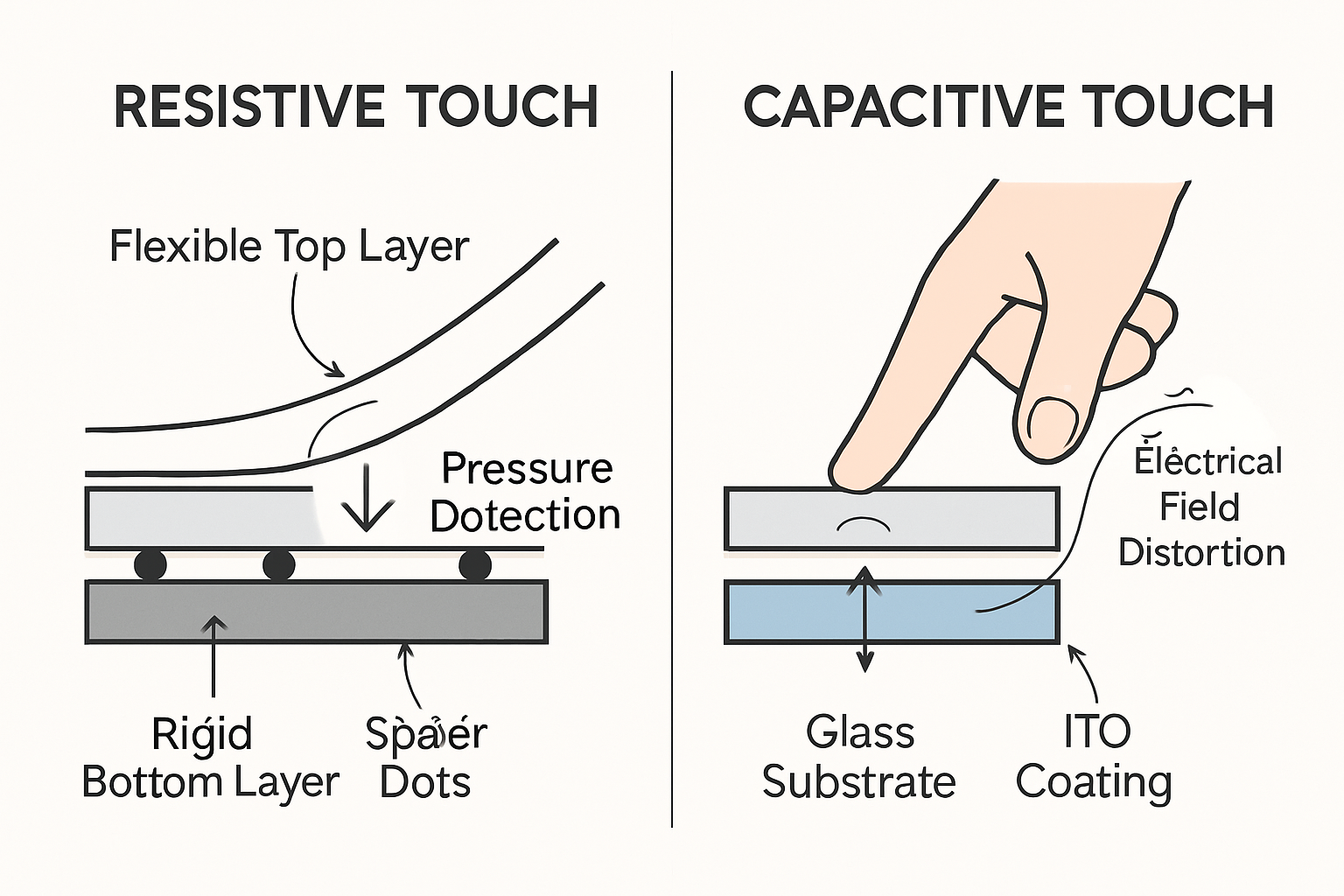
Figure 1: Structural comparison of resistive and capacitive touch technologies
Resistive Touch Technology: Pressure-Based Detection
Resistive touch screens operate on a remarkably straightforward principle: physical pressure detection.
Structure and Operation:
- Two electrically conductive layers separated by tiny spacer dots
- The outer layer is typically a flexible polyester film with a conductive coating
- The inner layer is usually a rigid glass or acrylic substrate with a similar conductive coating
- When pressure is applied, the layers connect, creating an electrical circuit
- The controller measures the voltage at the point of contact to determine touch location
Key Advantages:
- Input Flexibility:Works with any input device (finger, gloved hand, stylus, etc.)
- Cost-Effectiveness:Generally less expensive than capacitive alternatives
- Environmental Resilience:Less susceptible to moisture, dust, and electrical interference
- Precision:Excellent for detailed work requiring pinpoint accuracy
- Simplicity:Minimal processing requirements and straightforward integration
Limitations:
- Lower clarity due to multiple layers (typically 75-80% light transmission)
- Reduced durability with moving parts susceptible to wear
- Limited multi-touch capabilities in standard implementations
- Less responsive than capacitive technology
- Requires calibration more frequently
Capacitive Touch Technology: Electrical Field Detection
Capacitive touch screens detect changes in an electrical field rather than physical pressure.
Structure and Operation:
- Glass substrate coated with a transparent conductive material (typically ITO)
- When a conductive object (like a finger) touches the screen, it distorts the electrostatic field
- The controller measures this distortion to determine touch location
- Surface capacitive uses a single layer, while projected capacitive uses a grid pattern
Key Advantages:
- Superior Optical Clarity:Typically 90%+ light transmission
- Enhanced Durability:No moving parts to wear out
- Multi-Touch Capability:Supports complex gestures and multiple simultaneous touches
- Improved Responsiveness:More sensitive and requires minimal pressure
- Modern Aesthetics:Sleeker appearance preferred in consumer applications
Limitations:
- Requires conductive input (bare finger or special stylus)
- More susceptible to electromagnetic interference
- Higher cost compared to resistive technology
- Performance degradation in humid environments
- Higher power consumption
Application-Specific Considerations
Different environments and use cases demand different touch technologies:
Industrial and Manufacturing
Recommended Technology: Resistive
Key Factors:
- Operators often wear gloves
- Harsh environments with dust and debris
- Potential for liquid exposure
- Precision input requirements
- Cost-sensitivity in large deployments
Retail and Point-of-Sale
Recommended Technology: Capacitive (with resistive as a budget option)
Key Factors:
- Customer-facing aesthetics importance
- Moderate environmental challenges
- Balance of durability and responsiveness
- Multi-touch functionality for modern interfaces
- Frequent usage requiring durability
Medical Environments
Recommended Technology: Depends on specific application
Key Factors for Resistive:
- Compatibility with gloved operation
- Precision for detailed medical applications
- Ease of cleaning and sterilization
Key Factors for Capacitive:
- Enhanced visual clarity for diagnostic displays
- Multi-touch for advanced medical interfaces
- Modern appearance for patient-facing systems
Outdoor and Public Installations
Recommended Technology: Specialized resistive or protected capacitive
Key Factors:
- Extreme temperature variations
- Exposure to precipitation and direct sunlight
- Vandalism concerns
- Wide range of user interaction styles
- Minimal maintenance requirements
Regional Considerations for Touch Screen Selection
Middle East Environments
The Middle East presents unique challenges for touch screen implementation:
Environmental Factors:
- Extreme heat affecting electronic components
- Sand and dust ingress concerns
- High UV exposure for outdoor installations
- Significant temperature fluctuations between day and night
Recommended Approaches:
- Enhanced sealing for resistive systems
- Specialized high-temperature capacitive solutions
- UV-resistant coatings for outdoor applications
- Thermal management systems for enclosed installations
- Regular maintenance schedules to address dust accumulation
Southeast Asia Considerations
Southeast Asia's environmental factors create different challenges:
Environmental Factors:
- High humidity affecting capacitive sensitivity
- Monsoon conditions for outdoor installations
- Tropical heat combined with moisture
- Varied user interaction patterns across cultures
Recommended Approaches:
- Humidity-resistant capacitive implementations
- Enhanced water-resistant resistive options
- Corrosion-resistant materials for coastal areas
- Calibration systems accounting for humidity variations
- Localized testing under actual environmental conditions
Making the Right Selection
When selecting touch screen technology for your application, consider these key factors:
- User Interaction Requirements:
- Will users be wearing gloves?
- Is multi-touch functionality necessary?
- What level of precision is required?
- Environmental Conditions:
- Temperature range of operation
- Exposure to moisture, dust, or chemicals
- Indoor vs. outdoor installation
- Performance Priorities:
- Visual clarity requirements
- Response time sensitivity
- Expected lifespan and durability needs
- Budget Constraints:
- Initial implementation costs
- Long-term maintenance considerations
- Total cost of ownership
- Integration Complexity:
- Available controller options
- Software compatibility requirements
- Power consumption limitations
Emerging Hybrid Solutions
The touch screen industry continues to evolve with new technologies addressing the limitations of traditional options:
- Film-Glass Hybrid Resistive:Combines durability with enhanced clarity
- Surface Acoustic Wave (SAW):Offers excellent clarity with moderate durability
- Infrared Touch Frames:Provides non-contact detection for specialized applications
- In-Cell and On-Cell Touch:Integrates touch sensors directly into display layers
At XIANHENG, we offer both resistive and capacitive touch solutions optimized for various commercial and industrial applications. Our engineering team can help you select the optimal technology based on your specific requirements and environmental conditions.
For applications where touch interface selection is critical, we recommend:
- Resistive technology for industrial, harsh environment, and gloved-operation applications
- Capacitive technology for consumer-facing, multi-touch, and visually demanding applications
- Specialized solutions for unique environmental challenges in the Middle East and Southeast Asia
-
Contact our engineering team for a personalized assessment of your touch screen requirements.


