

International standards play a critical role in ensuring that industrial LCD displays operate safely, reliably, and predictably within complex systems. Among these standards, IEC and EN regulations form the backbone of compliance requirements across global industrial markets.
For any industrial LCD screen intended for use in regulated environments, understanding applicable IEC and EN standards is essential—not only for certification, but for sound engineering decisions.
This article outlines the key IEC and EN standards relevant to industrial LCD displays, explains their practical impact on design and testing, and clarifies common misconceptions surrounding compliance.
Before examining individual standards, it is important to understand how IEC and EN frameworks function within the broader regulatory landscape.
Claim: IEC and EN standards define engineering expectations, not just regulatory checklists.
Table of Contents
- How Do IEC and EN Standards Apply to Industrial LCD Displays?
- Which IEC Safety Standards Affect Industrial Displays?
- What EMC-Related Standards Are Most Relevant?
- How Should Engineers Use Standards in Practice?
How Do IEC and EN Standards Apply to Industrial LCD Displays?
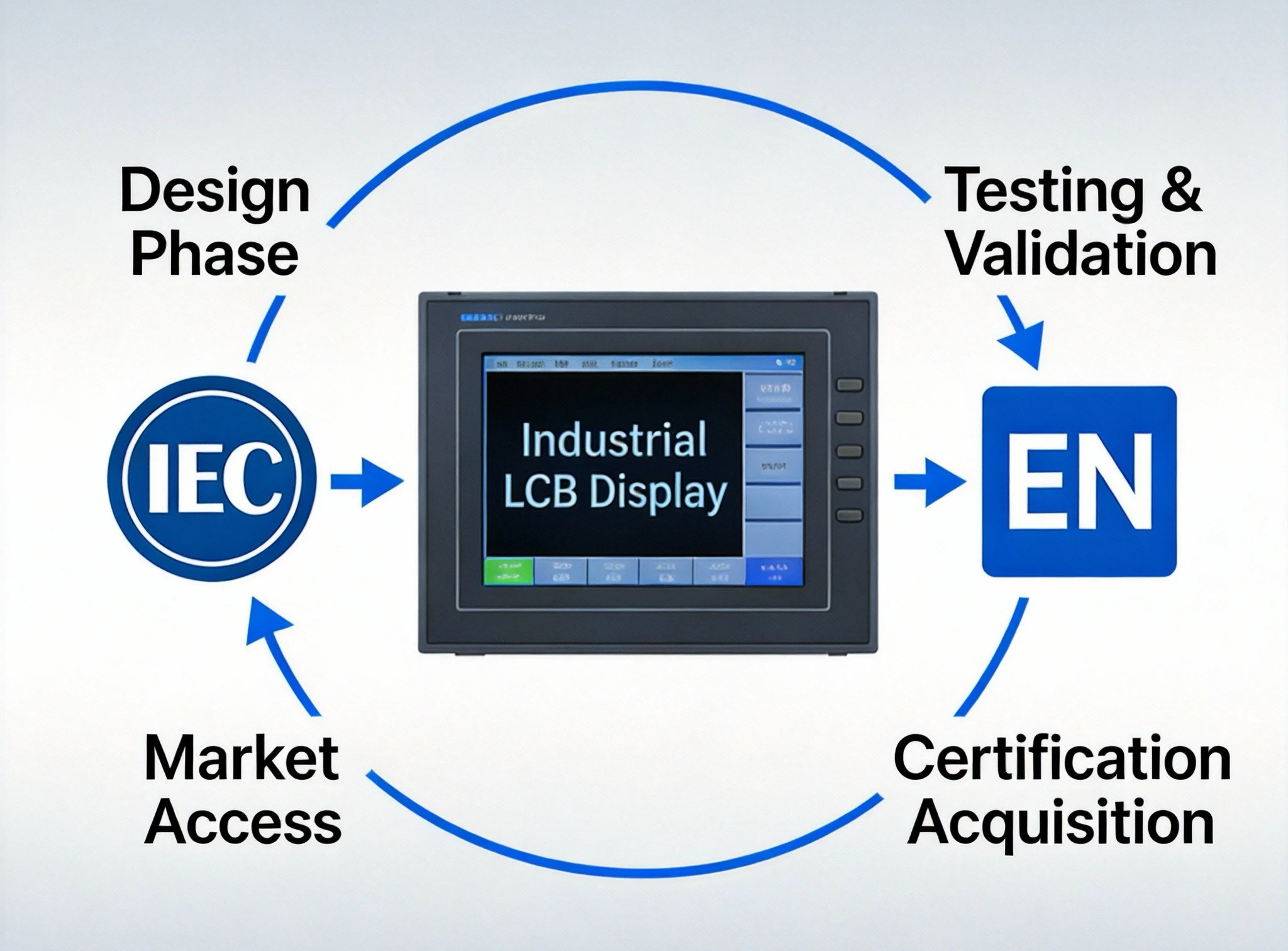
IEC (International Electrotechnical Commission) standards establish globally recognized technical requirements for electrical and electronic equipment. EN standards are European harmonized versions that enable conformity within the EU regulatory framework.
For industrial LCD displays, these standards apply in several ways:
- As standalone display modules
- As subassemblies within certified systems
- As safety-relevant human–machine interfaces
Compliance responsibility may rest with the display supplier, system integrator, or both—depending on how the display is deployed.
Claim: Standards apply based on system context, not component category alone.
Which IEC Safety Standards Affect Industrial Displays?
Electrical safety standards are fundamental to industrial LCD compliance. They define insulation requirements, protection against electric shock, and safe operation under fault conditions.
Commonly relevant safety standards include:
- IEC 62368-1 (Audio/Video, ICT equipment safety)
- IEC 61010-1 (Measurement, control, and laboratory equipment)
- IEC 60204-1 (Safety of machinery – electrical equipment)
These standards influence power design, grounding, insulation distances, and enclosure integration. They also intersect with the functional safety considerations discussed in Why Do Industrial LCD Screens Need Compliance and Certification? .
Claim: Electrical safety compliance begins at the design stage.
⚙️ Designing a system for regulated industrial markets? Explore XIANHENG’s industrial LCD screen solutions aligned with global safety standards .
What EMC-Related Standards Are Most Relevant?

Electromagnetic compatibility (EMC) standards ensure that industrial LCD displays neither emit excessive electromagnetic interference nor are unduly affected by external noise.
Key EMC-related standards include:
- IEC 61000-6 series (Generic EMC standards)
- IEC 61000-4 series (Immunity testing)
- EN 55032 / EN 55035 (Emission and immunity requirements)
EMC compliance is particularly important in electrically noisy industrial environments and will be examined in greater detail in How Do EMC and EMI Requirements Affect Industrial LCD Design? .
Claim: EMC compliance protects both the display and the surrounding system.
How Should Engineers Use Standards in Practice?
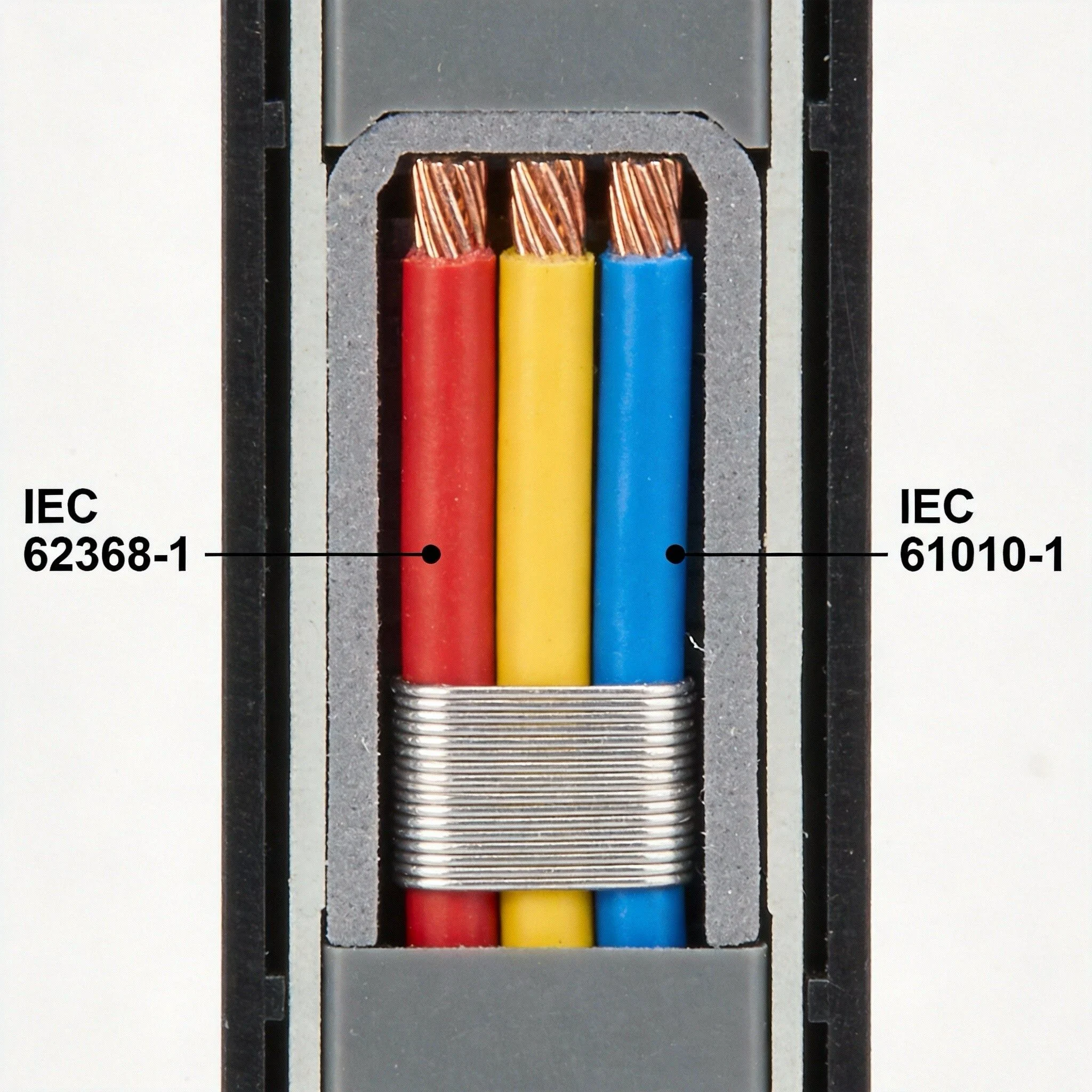
Rather than viewing standards as obstacles, experienced engineers use them as design guidance tools. Understanding standards early reduces late-stage redesigns and certification delays.
Best practices include:
- Identifying applicable standards at project initiation
- Designing with compliance margins
- Aligning supplier documentation with system requirements
- Planning verification testing early
These practices complement the reliability strategies discussed in the Reliability Cluster, including How Is MTBF Defined and Measured for Industrial LCD Screens? .
Claim: Standards are most effective when integrated into engineering workflows.
📩 Need help interpreting IEC or EN requirements for your display project? Contact XIANHENG’s engineering team for standards-driven design support.
Conclusion
IEC and EN standards form the regulatory foundation for industrial LCD display safety, EMC, and system integration. Understanding their intent and application enables engineers to design compliant, reliable, and future-proof display solutions.
As a key article within the Compliance Cluster of XIANHENG’s industrial LCD screen knowledge framework , this piece provides the essential standards context needed before addressing more specialized compliance topics.


