
In industrial systems, displays are far more than visual output devices. They serve as human–machine interfaces, safety information carriers, and decision-support tools in environments where errors can have serious consequences.
For this reason, an industrial LCD screen must meet not only performance expectations but also compliance and certification requirements defined by international standards.
This article explains why compliance and certification are essential for industrial LCD screens, how standards influence design and deployment, and why compliance should be viewed as an engineering necessity rather than a paperwork exercise.
To understand the role of compliance clearly, it is important to first recognize how industrial displays differ fundamentally from consumer products.
Claim: Compliance is a system-level safety requirement, not a marketing label.
Table of Contents
- Why Are Industrial LCDs Treated Differently from Consumer Displays?
- What Risks Does Non-Compliance Introduce?
- How Do Standards Shape Industrial LCD Design?
- Why Is Compliance Critical Across the Product Lifecycle?
Why Are Industrial LCDs Treated Differently from Consumer Displays?
Consumer displays are designed for controlled environments and short product lifecycles. In contrast, industrial LCD screens are deployed in systems that operate continuously, interact with operators, and influence critical decisions.
Key differences include:
- Exposure to harsh environmental conditions
- Integration into safety-relevant systems
- Long operational lifecycles
- Regulatory oversight in many industries
Because industrial displays can affect operator behavior and system safety, they are subject to stricter regulatory and certification expectations.
Claim: Industrial displays are part of regulated systems, not standalone devices.
What Risks Does Non-Compliance Introduce?
Failure to meet compliance requirements introduces risks that extend beyond technical performance. These risks affect safety, liability, and long-term system viability.
Common non-compliance risks include:
- Safety hazards due to unclear or unreliable information
- Regulatory rejection or delayed system approval
- Increased legal and liability exposure
- Forced redesigns late in the project lifecycle
Many of these risks are closely tied to reliability and environmental factors discussed in the Reliability Cluster, including How Do Environmental Factors Impact Industrial LCD Reliability? .
Claim: Non-compliance transforms technical issues into business and safety risks.
🛡 Planning a regulated industrial project? Explore XIANHENG’s industrial LCD screen solutions designed with compliance in mind .
How Do Standards Shape Industrial LCD Design?
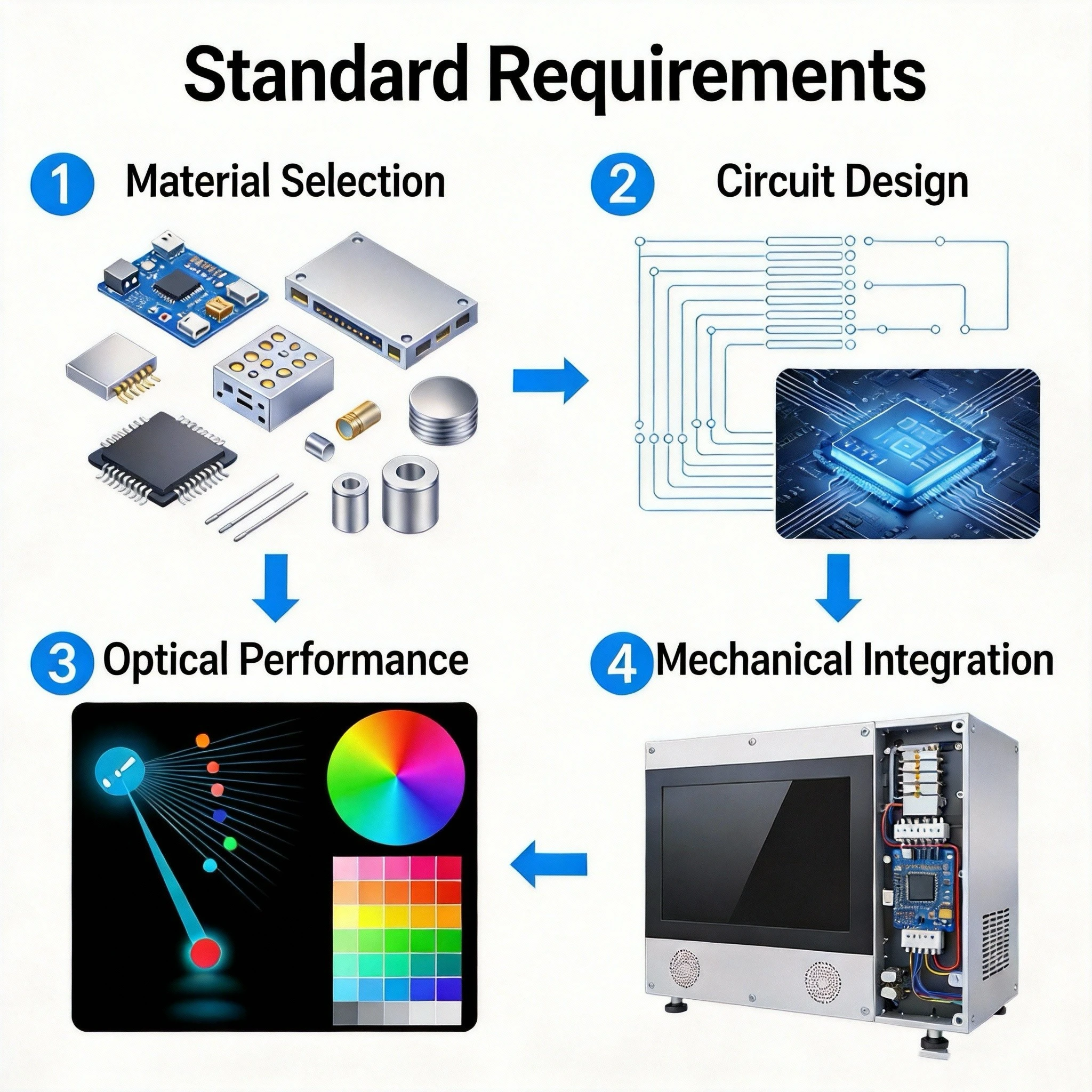
Compliance standards influence industrial LCD design decisions from the earliest engineering stages. They define not only what must be tested, but how displays should behave under defined conditions.
Standards typically address:
- Electrical safety and insulation
- Electromagnetic compatibility
- Environmental durability
- Information visibility and legibility
These requirements guide material selection, circuit design, optical performance, and mechanical integration—long before certification testing begins.
Claim: Compliance standards shape design decisions, not just test results.
Why Is Compliance Critical Across the Product Lifecycle?
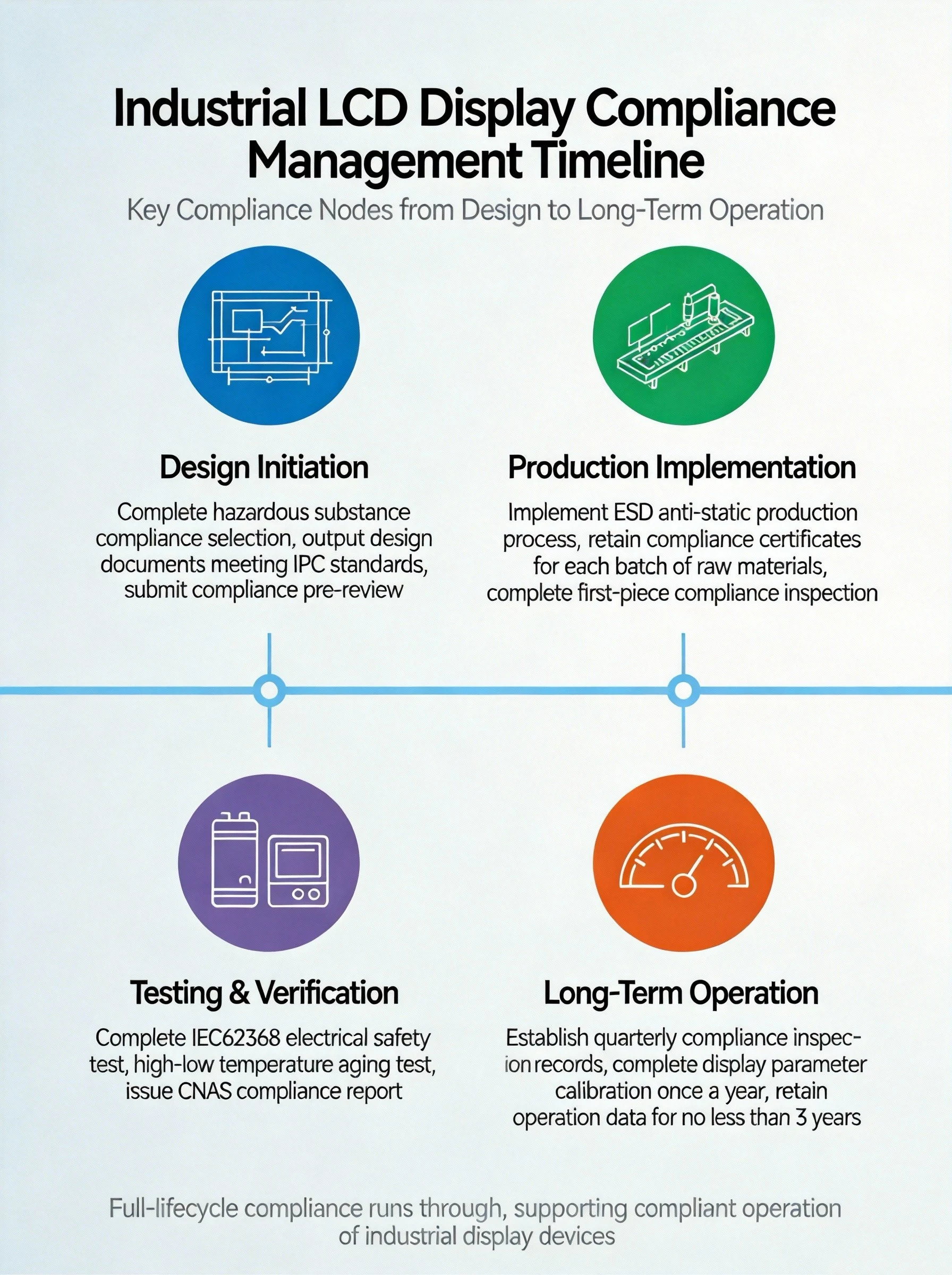
Compliance is not a one-time event achieved at product launch. For industrial LCD screens, it must be maintained throughout the system’s operational life.
Lifecycle compliance considerations include:
- Component changes and obsolescence management
- Revalidation after design modifications
- Long-term availability of compliant components
- Documentation and traceability
These concerns directly connect to long-term availability strategies discussed in Why Is Long-Term Availability Critical for Industrial LCD Screen Selection? .
Claim: Compliance must be sustained across the entire product lifecycle.
📩 Need guidance navigating compliance requirements for industrial displays? Contact XIANHENG’s engineering team for project-specific compliance support.
Conclusion
Compliance and certification are foundational requirements for industrial LCD screens, ensuring safety, reliability, and regulatory acceptance. They influence design decisions, deployment strategies, and long-term system success.
As the pillar article of the Compliance Cluster within XIANHENG’s industrial LCD screen knowledge framework , this article establishes why compliance is an engineering responsibility—integral to every serious industrial display project.


